
Published · Updated · EastCamp product team
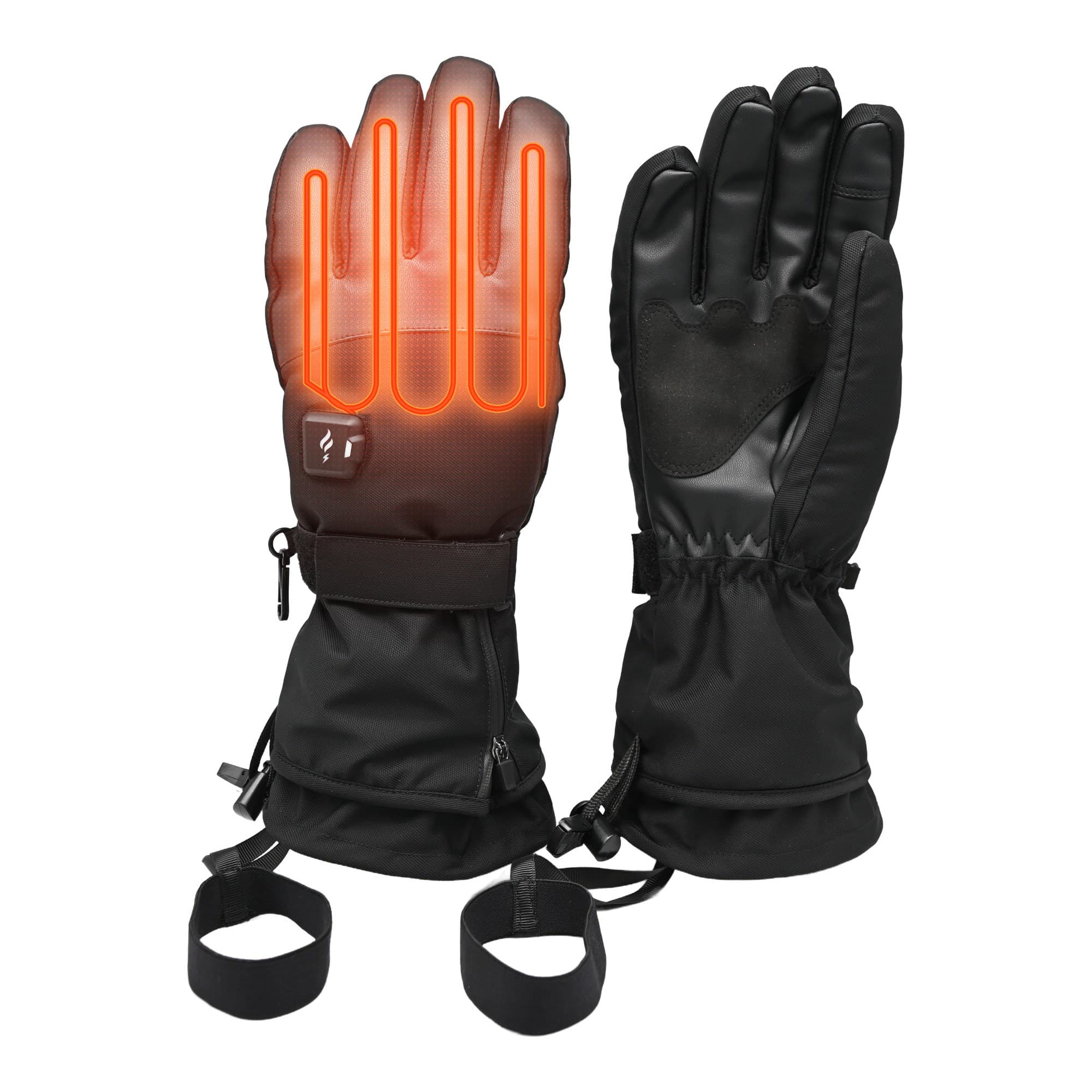
Cold hands make a winter day shorter than it needs to be. Ordinary gloves only hold on to the heat you produce yourself; if you don't have much, a thicker glove only helps so far. Heated gloves add warmth. But models differ a lot: where the heat sits, how strong the battery is, how they fit and what they were made for.
This guide sets out everything you will want to know before you choose. We are a Dutch brand, built by a team with more than ten years of experience in this market, so we also tell you where not to expect too much.
In short
- Check the heating zone first. Heat on the back of the hand alone is not enough if it is your fingers that get cold.
- Compare batteries in watt-hours (Wh), not just mAh. A battery with fewer mAh can hold more energy.
- Several settings plus boost is useful: warm up fast, then turn it down and stay warm economically.
- Mittens are warmer, gloves are handier. Choose by what you do with your hands.
- Measure your hand and use the size guide. Too tight pinches and makes you colder, not warmer.
- Care is simple: batteries out, damp cloth, never the washing machine.
How do heated gloves work?
Inside the glove are thin, flexible heating elements. At EastCamp they are made of composite fibre. A rechargeable lithium battery (in the cuff on the Urban models) sends a low voltage through them. The elements warm up and pass that heat on to your hand.
A push button switches the heating on and selects the setting. The colour of the light in the button shows which setting you are on. Insulation and a closed outer layer stop the heat from leaking straight out again.
So the difference from an ordinary winter glove is fundamental: an ordinary glove insulates, a heated glove insulates and heats. You notice it most when standing still, in the wind and during long spells outdoors.
Where does the heat go?
This is the most important question, and the one most often skipped. Cold hands usually start in the fingers. A glove that only heats the back of the hand feels nice when you put it on, but still leaves your fingers numb.
So look for the heating zone in the specifications. On our Urban models and the Alpin Mitten, the heating runs across the back of the hand and along the fingers. If a model says nothing about the fingers, ask before you buy.
Battery, voltage and capacity: how to compare fairly
5V or 7.4V
Heated gloves run on a low, safe voltage. You will mostly see two systems: 5V and 7.4V. A higher voltage allows more power in the same glove. What matters more is that the batteries belong with the glove: only use the batteries intended for that model.
At EastCamp, the Alpin and Velvet models use the 5V battery set and the Urban models use the 7.4V battery set. A set contains two batteries, one per glove.
Look at watt-hours, not just mAh
Capacity is often given in milliamp-hours (mAh). That figure only tells you something when the voltage is the same. A fairer comparison is in watt-hours (Wh): the amount of energy actually stored in the battery.
An example from our own range: our 5V battery has 3,000 mAh and 11.1 Wh, our 7.4V battery has 2,500 mAh and 18.5 Wh. Fewer mAh, but well over one and a half times the energy. If the Wh is not listed, comparing is difficult.
How long do they stay warm?
That depends on the setting, the outside temperature, wind and damp, how full the battery is and how old it is. Boost and the highest setting use the most; on the lowest setting one charge lasts longest. Use boost often and you will notice it on the other settings.
So be wary of one big number without any explanation. For each model we give the run time per setting as an indication in the specifications on the product page, so you can see what to expect on each setting. Long day out? Take a second set of batteries and keep it warm in an inside pocket.
Charging
You charge our batteries via USB-C with a CE-marked 5V 2A charger. While charging, the lights blink; once they all stay on, the battery is full. A full charge takes about five hours at most. Charge a new battery fully before first use.
Heat settings and boost
Several settings are not a luxury. On a cold morning you want heat quickly; after ten minutes of cycling or walking you need far less. Turning it down keeps you comfortable and saves the battery.
Our gloves have three settings plus boost: high (red), medium (orange) and low (blue). When you switch them on, they start in boost: the button blinks red. After about five minutes the glove switches to the medium setting by itself. Boost is meant for short, quick warming up and only works if the glove was switched off first.
It works best like this: warm up on a high setting, then turn down to a setting that feels just pleasant. Heat should feel comfortable, not hot.
Mittens or gloves?
Mittens are warmer. Your fingers sit side by side, share their warmth, and there is less surface for heat to escape from. If your fingers are always cold, a mitten is usually your best bet.
Gloves with fingers give more feel and dexterity: a zip, keys, a bike bell, switches. For cycling in town and everyday use they are often more practical.
Not sure? Think about what you do with your hands while you are outside. Lots of standing still or walking: mittens. Lots of grabbing, operating and holding: fingers. A middle way is the Alpin Mitten: a mitten with an inner glove with fingers (back in stock soon).
Getting the size right
A heated glove should fit closely, so the heating sits near your hand. But too tight is a common mistake. A glove that pinches restricts blood flow and insulates less well, so your hands actually get colder.
So measure the circumference of your hand across the knuckles, excluding the thumb. On every glove page you will find the size guide next to the size selector: it runs from about 19 cm (XS) to 24 cm (XXL). In between sizes? Choose the larger one. That also leaves room for a thin liner glove.
Insulation, waterproofing and touchscreen
Heating works best when the warmth stays inside. So also look at what a glove does without its battery.
- Insulation. Our Urban models and the Alpin Mitten have 3M Thinsulate insulation.
- Windproof and waterproof. A Hipora membrane makes the Urban models and the Alpin Mitten waterproof, windproof and breathable. Wind is often the biggest heat thief, especially on the bike.
- Touchscreen. With the Urban Classic and Urban Mitten you can use your phone without taking them off.
- Material. The Urban models have an outer of PU leather (vegan leather) with stretch, so they move with your hand.
Which glove suits how you use it?
Cycling and commuting
On the bike your hands cool down fastest: they sit still on the handlebars and catch all the wind. Choose a windproof glove that lets you brake and change gear easily. Switch the heating on before you set off, so you don't have to warm up once you are already cold.
The Urban Classic is made for this: a glove with fingers, touchscreen-friendly, waterproof and windproof, with the battery in the cuff close around the wrist. Prefer the warmth of a mitten? Then there is the Urban Mitten.
Walking and long spells outdoors
On a winter walk, out with the dog or on the touchline at the sports club, you stand still a lot. Warmth then matters more than dexterity. A mitten on a medium setting is often the most relaxed choice. On a long day, take a second battery set.
Winter sports
On the slopes, snow, damp and long days are the challenge. Look for a waterproof outer, good insulation and a cuff that fits over or under your jacket. Our Alpin series was developed for winter sports and will be back in stock soon. The Urban models are also waterproof, windproof and insulated, but they are designed for the city and the outdoors, not specifically for the slopes.
Motorbike and scooter
On a motorbike you need gloves that are made and certified to protect you in a fall. Our gloves were not developed for that. If you ride a motorbike, choose a heated glove that is approved as a motorcycle glove.
Working outdoors
If you work outside and use your hands a lot, gloves with fingers are usually handier. Note: heated gloves are not work gloves with cut or grip protection. If you need those, look at what your job requires.
Raynaud's and fingers that get cold quickly
Do you have Raynaud's phenomenon or other circulation problems? Then a few extra points apply, and we recommend talking to your doctor first. Heated gloves are an aid against the cold, not a treatment. We wrote a separate guide about it: heated gloves for Raynaud's.
Care: how to make them last
Heated gloves contain electronics, so different rules apply than for ordinary gloves:
- Always take the batteries out first.
- Clean the gloves with a damp cloth only.
- Do not machine wash, submerge, bleach, iron, tumble dry or dry clean them.
- Do not fold them double.
- Let them dry completely before the batteries go back in.
Putting them away at the end of winter? Charge the batteries to about half, take them out of the gloves and store everything somewhere dry and cool. Top the batteries up at least once every three months. A battery left completely empty or completely full for a long time deteriorates faster.
Using lithium batteries safely
Lithium batteries are safe if you treat them properly. From our manual, in short:
- Only use the original batteries and the supplied cable, with a CE-marked charger.
- Do not charge unattended, near flammable materials, or when the battery is wet, damaged, very warm or very cold.
- Stop at once if a battery gets unusually hot, deforms, leaks, smokes or smells strange.
- Do not use the gloves while sleeping, on children without supervision, or together with other heat sources.
- Is your sense of heat reduced, for example through diabetes, circulation or nerve problems? Talk to a doctor first.
- Stop if you feel pain, tingling, redness or a burning sensation.
Take old batteries to a collection point, not the household waste. You will find the full instructions in the manuals.
Checklist before you buy
- Does the heating run along the fingers, or only across the back of the hand?
- How much energy (Wh) does the battery hold, and is it included or sold separately?
- How many settings are there, and is there a boost to warm up quickly?
- Mittens or fingers: what do you do with your hands while you are outside?
- Does the size match the circumference of your hand?
- Is the outer layer waterproof and windproof?
- How do you charge them, and how long is the warranty? At EastCamp: USB-C, a 24-month warranty on material and manufacturing defects, and after 12 months the batteries keep at least 80% of their capacity.
Our heated gloves
Available now are the Urban Classic (glove with fingers) and the Urban Mitten (mitten). You buy both as a bundle with the 7.4V battery set or separately; the battery set is also sold on its own. The Alpin and Velvet models will be back in stock soon. See the full range under heated gloves.
Cold feet too? Read our heated socks buying guide.
Frequently asked questions
- How do heated gloves work?
- A rechargeable battery, usually in the cuff, sends a small current through thin, flexible heating elements inside the glove. They warm up and pass that heat on to your hand. A button lets you choose how much heat you want.
- Do heated gloves heat your fingers?
- That depends on where the heating elements sit, so check the heating zone of each model. On the EastCamp Urban models and the Alpin Mitten, the heating runs across the back of the hand and along the fingers. In a mitten, the fingers also lie against each other, which keeps them warmer still.
- Which gloves are really warm?
- It is the combination that counts: active heating, good insulation and a windproof, waterproof outer layer. If your fingers get cold quickly, you will usually be warmer in a mitten than in a glove with fingers.
- How do you charge heated gloves?
- Take the batteries out of the gloves and charge them with the supplied USB-C cable and a CE-marked 5V 2A charger. Do not charge them unattended, or when they are colder than 5 °C or warmer than 40 °C. When every light stays on, the battery is full.
- How do I keep my hands warm on the bike?
- Switch the heating on before you set off, choose a windproof glove that still lets you brake and change gear easily, and keep your core warm too. When your core gets cold, your body cuts back blood flow to the hands first.
- Can you wash heated gloves?
- Not in the washing machine. Take the batteries out and clean the gloves with a damp cloth only. Do not submerge them or fold them double, and let them dry before the batteries go back in.