
Published · EastCamp product team
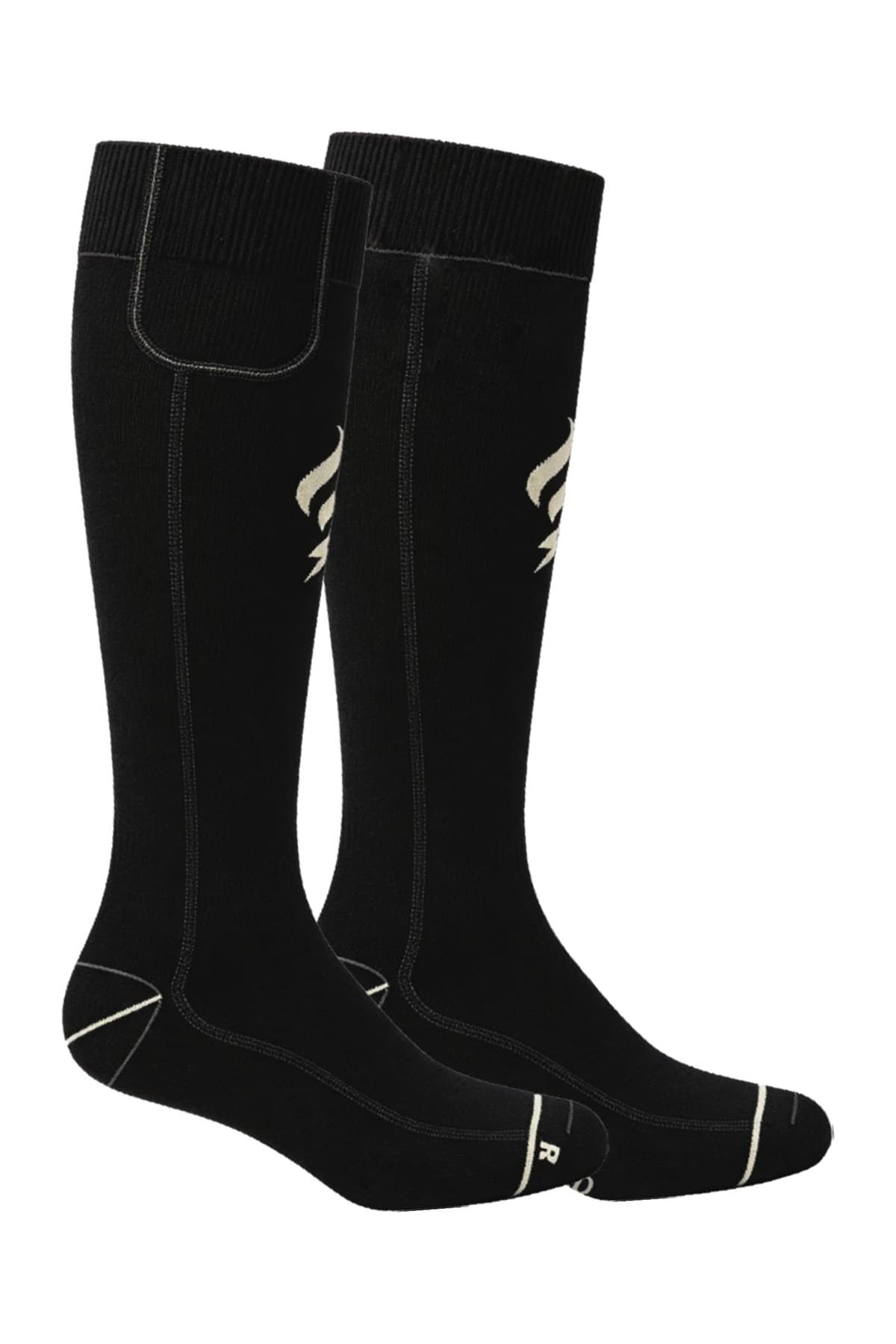
Cold feet are stubborn. You can pull on a thick sock and lace up your shoes, but if your feet produce little heat themselves, they stay cold. Heated socks add warmth where the cold usually starts: under the toes.
In this guide you will read how they work, what to look at for battery, run time, material and size, when heated insoles are the better idea, and how to use and wash them safely. We are a Dutch brand, built by a team with more than ten years of experience in this market, and we are also honest about what not to expect.
In short
- Heat under the toes is what counts; that is where feet get cold first.
- Are the batteries included? With some socks you buy them separately. Our socks come with two in the box.
- Run time is always an indication. Cold, wind and the age of the battery shorten it.
- A remote control is handy: you change settings without pulling up your trouser leg.
- Wool in the blend wicks moisture away. Wet feet get cold faster.
- Washing is possible, but by hand: batteries out, 30 °C at most, in a laundry bag.
How do heated socks work?
A thin, flexible heating element sits inside the sock. A small rechargeable battery supplies the power. With our socks you tuck the battery packs into the cuff at the top of the sock and plug the sock's cable into them. Switch the heating on and the element warms up and passes that heat on to your foot.
That is how heated socks differ from a thick winter sock. A winter sock only insulates: it holds on to the heat your foot produces itself. If your feet stand still for a long time, or circulation in your feet is limited, there is little to hold on to. A heated sock adds warmth.
Where does the heat go?
Feet usually get cold first at the toes, furthest from your core. So check where the heating zone sits on each model. On our heated socks the heating sits under the toes.
A sock that mainly heats the instep or the ankle feels pleasant when you put it on, but still lets the toes cool down.
Battery and run time
Is the battery included?
Check carefully what is in the box. With our socks you get two Li-polymer battery packs (3.7V, 2,200 mAh, 8.14 Wh each), a wireless remote control and a USB-C charging cable. So there is nothing extra to buy.
How long do they stay warm?
That depends on the setting. For our socks we give an indication of about 4 hours on high, 5.5 hours on medium and 8 hours on low. These values were measured at 20 °C in a test room. Outside in the cold, with cold or older batteries, the run time is shorter.
That is why it makes sense to start warm and then turn it down. Your feet stay comfortable and the battery lasts longer. Heading out for the whole day? Charge the batteries fully the evening before.
Charging
You charge our batteries via USB-C with a CE-marked charger. A full charge takes about eight hours at most. Do not charge them unattended: plug them in while you are at home, not overnight while you sleep. While charging, the lights blink; once they stay on, the battery is full. The batteries last more than 300 charging cycles.
Controls: button or remote
On socks, the button sits on the battery at the top of the sock. With long trousers or ski trousers over it, that is awkward. A wireless remote control solves this.
You can operate our socks both ways: with the button on the battery or with the remote. You choose from three settings: high (red), medium (yellow) and low (green). You pair the remote with the batteries once; after that you switch them on and off and change settings without bending down.
Material: why wool matters
A heated sock is also simply a sock you wear all day. The material decides how comfortable that is. Wool wicks moisture away and feels less clammy than cotton, and wet feet cool down quickly.
Our socks are made of a premium merino wool blend that dries quickly and stays soft, even after hours of wear. The cuff is extra soft; that is also where the battery packs go.
Fit and size
A heated sock should fit closely, so the heating stays in the right place under your toes. Choose your size by your shoe size. Our socks come in 35–38, 39–42 and 43–46.
Pay attention to your shoes as well. A sock squeezed into shoes or boots that are too tight restricts blood flow, and then your feet get colder, not warmer. So try your winter socks on together with the shoes you will wear them in.
Heated socks or heated insoles?
Both warm your feet, but they work differently. Which suits you better depends on how you use them.
Heated socks sit directly around your foot and work in any shoe or boot they fit into. The batteries sit in the cuff. They feel like an ordinary winter sock and you can wash them by hand.
Heated insoles go into your shoe. Our heated insoles heat under the toes and the forefoot, the battery is built into the sole, and you control them with a remote or the button on the sole. You cut them to size along the marked lines, so they fit hiking boots, work shoes and trainers. They come in 35–40 and 41–46. You simply wear your own socks with them. They cannot be washed, but you can wipe them with a damp cloth.
In short: if you often switch shoes or prefer to wear your own socks, choose insoles. If you want the warmth right around your foot and a sock you can wash, choose heated socks.
Which suits how you use them?
Winter sports
Ski boots close tightly and your feet move little. A well-fitting sock with heat under the toes then works better than an extra-thick sock you have to cram into the boot. With a remote you don't have to fiddle with your ski boot to change settings.
Walking, hunting, fishing and the touchline
Standing still is hardest: your feet produce hardly any heat and the ground draws it away. That is exactly when active heat helps. Start on a high setting and turn it down once your feet are warm.
Working outdoors
If you stand outside in work shoes all day, insoles you put into your own shoes are often the handiest. Heated socks are a good alternative if your shoes have enough room.
At home and in bed
Cold feet on the sofa? Heated socks work indoors too. But do not use them while sleeping. That is in the safety instructions of our manual, and it applies to our other heated products as well.
Raynaud's, diabetes or reduced sensation
Do you have circulation or nerve problems, as with diabetes or Raynaud's? Then talk to your doctor before use. If your sense of heat is reduced, you will not notice in time when it gets too warm. Heated socks are an aid against the cold, not a treatment. For cold hands with Raynaud's we wrote a separate guide: heated gloves for Raynaud's.
Washing and care
You wear socks directly on your skin, so you want to be able to wash them. You can, with a few rules:
- Always take the batteries out first.
- Hand wash only, at 30 °C at most, in a laundry bag.
- Do not machine wash, bleach, iron, tumble dry or dry clean them.
- Do not fold them double.
- Let the socks and the connectors dry completely before the batteries go back in.
Putting them away after winter? Charge the batteries to about half and store socks and batteries somewhere dry and cool. Top the batteries up at least once every three months.
Safe use
From the manual for our socks, in short:
- Only use the original batteries and the supplied cable, with a CE-marked charger.
- Do not charge unattended, near flammable materials, or when the battery is wet, damaged, very warm or very cold.
- Do not use the socks while sleeping, on children without supervision, when they are wet, or on damaged or irritated skin.
- Do not combine them with other heat sources.
- During long use, check your feet regularly and stop if you feel pain, tingling, redness or a burning sensation.
You will find the full instructions in the manuals.
Five mistakes that lead to cold feet
- Only switching on once your feet are freezing. Warming up then takes much more effort. Switch the heating on before you go outside.
- Running the highest setting all day. Then the battery runs out first. Warm up, then turn down to a setting that feels just pleasant.
- Shoes that are too tight. Pinching restricts blood flow. Winter footwear one size up can make more difference than an extra layer.
- Putting on wet socks. Only use heated socks when they are dry, and on a long day consider bringing a dry pair of ordinary socks for afterwards.
- Storing batteries empty. A battery left empty for months deteriorates. Store them half charged.
Checklist before you buy
- Does the heating sit under the toes?
- Are the batteries included, and how much energy (Wh) do they hold?
- Is the run time per setting stated, and at what temperature was it measured?
- Can you change settings without bending down?
- What is the sock made of, and how do you wash it?
- Does the size fit, and does the sock fit the shoes you will wear with it?
- Or would insoles be handier for how you use them?
Our heated socks
The EastCamp heated socks are made of a merino wool blend, heat under the toes and come with two battery packs, a remote control and a USB-C cable. You get a 24-month warranty on material and manufacturing defects, and after 12 months the batteries keep at least 80% of their capacity. Prefer insoles? Take a look at the heated insoles. More warm gear is in heated clothing.
Cold hands too? Read our heated gloves buying guide.
Frequently asked questions
- How do heated socks work?
- A thin heating element sits in the sock, usually under the toes. A small rechargeable battery, in the cuff on our socks, supplies the power. You choose the heat setting with a button or a remote control.
- What are the best socks for cold feet?
- If your feet get cold quickly, a combination works best: active heat under the toes, a wool blend that wicks moisture away and shoes that don't pinch. An ordinary thick sock only holds on to the heat your feet produce themselves.
- Which socks help with cold feet in bed?
- Heated socks are not meant for bed: do not use them while sleeping. An ordinary wool sock, or warming your feet up beforehand, is the safer choice.
- How long do heated socks stay warm?
- For our socks the indication is about 4 hours on high, 5.5 hours on medium and 8 hours on low, measured at 20 °C. Outside in the cold and with older batteries it will be shorter.
- What temperature should you wash heated socks at?
- Wash our heated socks by hand only, at 30 °C at most, in a laundry bag, after taking the batteries out. Not in the washing machine and not in the tumble dryer.
- Are heated socks suitable for diabetes or neuropathy?
- Talk to your doctor first. If your sense of heat is reduced, you will not notice in time when it gets too warm. That is why heated products are not intended for people who cannot feel heat well.