
Published · EastCamp product team
Anyone who rides through the winter knows it: after fifteen minutes on the motorway you can't feel your fingers. The wind is far stronger than on a bicycle and your hands have nowhere to hide. Broadly, there are two solutions: heat from the handlebars (heated grips) or heat in the glove itself. In this guide we compare them side by side.
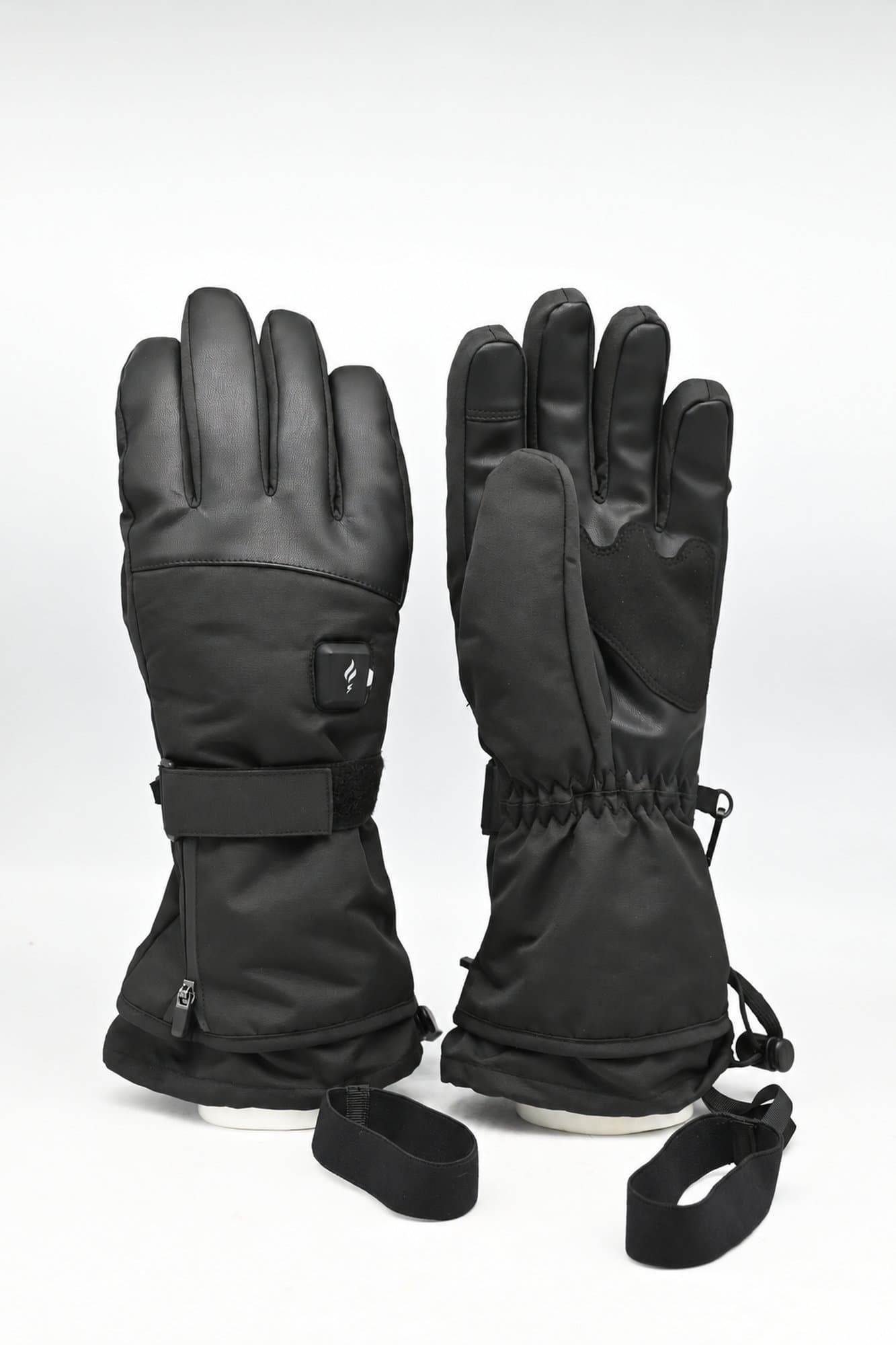
We're honest about ourselves too. EastCamp makes heated gloves for town, cycling and outdoor use. They are not designed and not certified as motorcycle gloves. That's why we advise against them on a motorbike or scooter, and explain what you do need there.
In short
Heated grips warm the inside of your hand, run on the bike's power and never need charging; the back of your hand and your fingertips stay in the wind. A heated motorcycle glove warms the whole hand, but must be certified as a motorcycle glove to protect you in a fall. Many winter riders combine heated grips with handguards and a good, certified winter glove.
What are heated grips?
Heated grips sit in or around the handlebar grips. A heating element warms the rubber, and with it the inside of your hand. Many touring bikes have them as standard; on others you have them fitted afterwards. Power comes from the bike's electrical system, usually with several settings via a switch on the bars.
Pros: always available while the engine runs, nothing to charge, no cables on your body, and you can keep wearing your own motorcycle gloves.
Cons: only the palm and the inside of the fingers get warm. The back of your hand and your fingertips catch the wind and stay cold. Through thick winter gloves you feel the heat less. And fitting them means some work on the wiring.
What do heated motorcycle gloves do?
A heated motorcycle glove has the heating in the glove itself, often over the back of the hand and along the fingers. There are two kinds:
- On their own battery: rechargeable, like heated gloves for cycling. Nothing to fit, but you do have to charge them.
- Wired to the bike (12V): a cable runs up your sleeve to the bike. No battery to run flat, but you're tethered by a cable.
The key difference from an ordinary heated glove isn't the heating; it's the protection. A motorcycle glove has to cope with abrasion and impact in a fall. That's what the reinforcements on the palm and knuckles are for, along with a closure that keeps the glove on your hand.
Heated grips, gloves or handguards: the differences
| Heated grips | Heated motorcycle glove | Handguards or bar muffs | Ordinary winter glove | |
|---|---|---|---|---|
| Where the heat is | Palm, inside of fingers | Whole hand, often fingers too | No heat of their own, block the wind | Insulation only |
| Power | Bike's electrical system | Own battery or bike | None | None |
| Charging | No | Yes, for battery models | No | No |
| Protection in a fall | Depends on your own glove | If certified as a motorcycle glove | Depends on your own glove | If certified as a motorcycle glove |
| Fitting | Yes | No (battery) or a connection (12V) | Yes, simple | No |
Handguards and bar muffs don't heat, but they take the wind off your hands. That's exactly what heated grips lack, which is why the combination often works better than either on its own.
Why a certified motorcycle glove matters
In a fall, you almost always put your hands out. Without protection, tarmac wears straight through an ordinary glove. Motorcycle gloves are therefore tested for abrasion resistance, seams, closure and knuckle protection. In Europe you recognise them by the CE marking as a motorcycle glove to standard EN 13594. The label inside the glove shows what it has been tested for.
In some countries, a certified glove is also compulsory. In France, for example, this applies to riders and passengers of motorbikes, scooters and mopeds. Going on a motorbike trip? Check the rules of the countries you'll pass through beforehand.
Can you use our heated gloves on a motorbike?
No. Our Urban gloves are waterproof, windproof, insulated and heated over the back of the hand and along the fingers. That makes them warm, but not safe in a fall: they are not designed or certified as motorcycle gloves. The same goes for scooters and mopeds.
Don't use them as liners under your motorcycle gloves either. They're not made for that. Two thick layers make the motorcycle glove too tight, which restricts blood flow and actually costs warmth, and you lose feel at the clutch and brake.
How to keep your hands warm on a motorbike
- Stop the wind first. Handguards, bar muffs or a fairing often do more than a thicker glove.
- Choose a certified winter glove that fits well. Too tight gets colder, not warmer.
- Add heat: heated grips, a certified heated motorcycle glove, or both.
- Keep your core warm. When your core cools, less blood goes to your hands. A thermal layer or liner in your motorcycle jacket helps.
- Seal your sleeves. Cold air blowing in at the wrist chills your whole forearm.
- Take breaks. On long rides in the cold: stop, warm up and have a hot drink.
Do you also cycle or spend a lot of time outdoors?
That's what our gloves are made for. The Urban Classic (glove with fingers) and the Urban Mitten (mitten) are designed for cycling, town and a day outside. Read heated gloves for cycling if you cycle to work in winter, or browse all heated gloves.
Want to know how heated gloves work, how to compare batteries fairly and how to use them safely? It's all in our complete heated gloves buying guide.
Frequently asked questions
- Is it worth getting heated grips?
- For many riders, yes: you switch them on with a button, they warm your palms as long as the engine runs, and there's nothing to charge. The back of your hand and your fingertips do stay in the wind. Add handguards and a good winter glove and the effect is much greater.
- Will heated grips drain the battery?
- Heated grips draw power from the bike's electrical system. With the engine running, that's not a problem on most bikes; with the engine off, they will drain the battery. That's why many kits have battery monitoring. On a small bike or scooter, check what the charging system can deliver, and never leave the grips on with the engine off.
- Which is better, heated grips or heated gloves?
- Heated grips warm the inside of your hand and never need charging. A heated motorcycle glove also warms the back of the hand and the fingers, but needs charging or connecting. Riders who do long winter miles often combine heated grips with handguards, or choose a certified heated motorcycle glove.
- Are gloves compulsory on a motorbike?
- It depends on the country. In France, for example, certified CE-marked gloves are compulsory for rider and passenger. Check the rules of the countries you ride in before you go. Law aside: in a fall, your hands are often the first thing to hit the ground.
- Can I use EastCamp gloves on a motorbike or scooter?
- No. Our gloves are not designed or certified as motorcycle gloves and don't protect you in a fall. Don't wear them as liners under your motorcycle gloves either. On a motorbike or scooter, choose a glove certified as a motorcycle glove.